
Breaking rank: On the legacy of Anne Braden and the fight for our future
Beth Howard
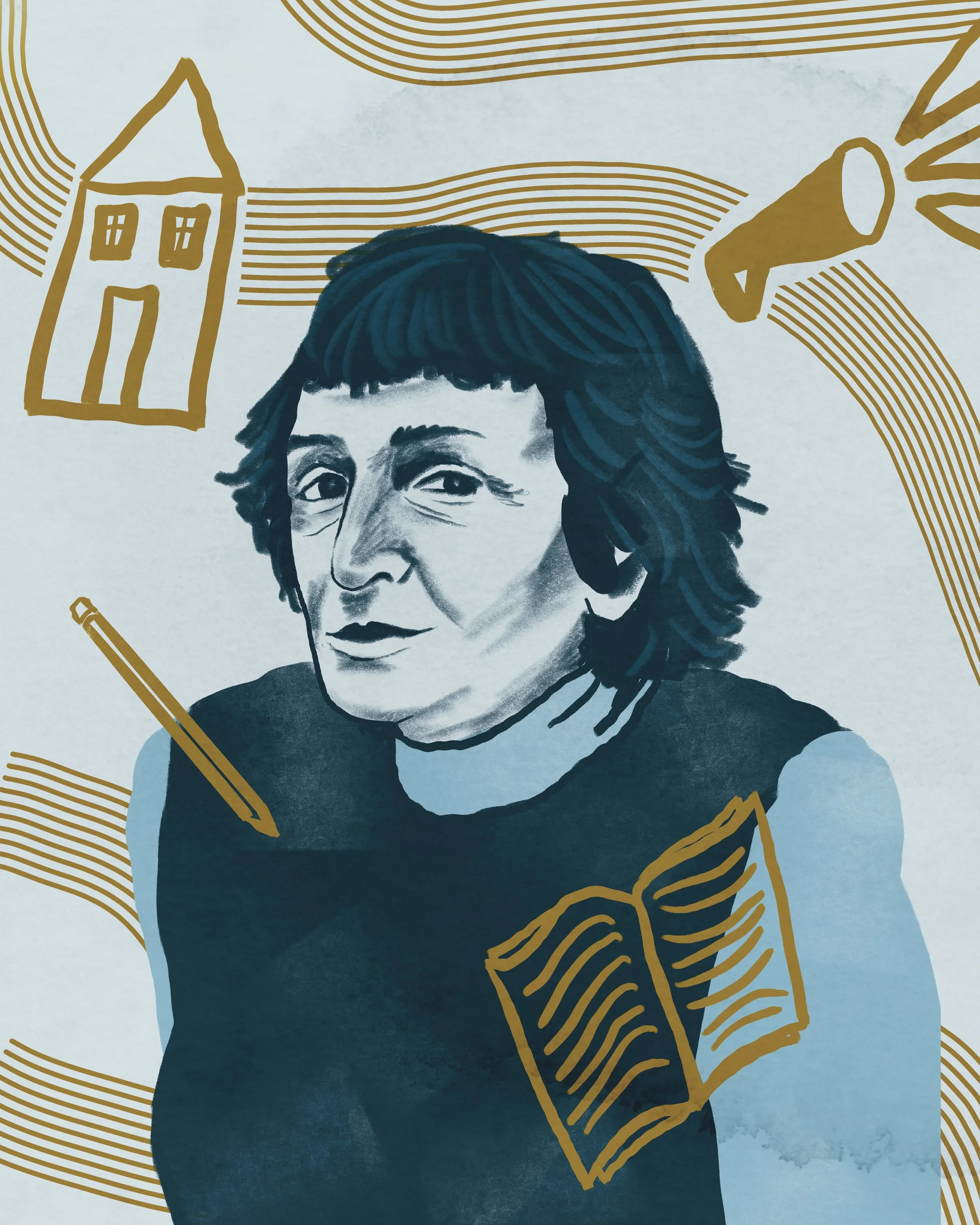
“In a sense, the battle is and always has been a battle for the hearts and minds of white people in this country. The fight against racism is not something we’re called on to help people of color with. We need to be involved as if our lives depend on it, because, in truth, they do.”
“[The police] said, ‘You’re not a real Southern woman.’ I said, ‘No, I’m not your kind of Southern Woman.’ ”
— Anne Braden
I’m writing this essay the day after Renee Nicole Good was murdered by an ICE agent in Minneapolis, but you’ll be reading this in the future, after events have unfolded in ways I can’t predict yet, but in ways I pray have arced toward justice.
Renee Nicole Good, a white woman, did what those in power fear the most: She broke rank, rejected the racist lies aimed at winning over white people and instead chose to stand in solidarity with her immigrant neighbors. She was killed less than one mile from where George Floyd was murdered by Minneapolis Police in 2020, another loss of precious life due to racist state-sanctioned violence.
I am also a white woman breaking rank. A working-class Appalachian woman from a small rural community in Eastern Kentucky, the daughter of a coal miner and a grocery store clerk, who deeply understands that everything I want for myself, my family and my community lies on the other side of working-class white people being in unbreakable solidarity with people of color. The decision to collectively fight against racism is the right one – the only one – for me. It is a decision that requires me to take risks, step into the unknown, and be courageous, and in doing so, have a shot at a future where we all have what we need and deserve.
I have been a community organizer in the U.S. South for two decades, bringing working-class people together to challenge powerful systems and institutions that have abused our labor for their profit for far too long. Even so, I still sometimes find myself scared, anxious and unsure of what to do next. I think most of us do.
As I organize nationally with Showing Up for Racial Justice and locally with my folks in rural Eastern Kentucky, we are fighting the authoritarian alliance of MAGA and the billionaire class. Masses of people are being terrorized and murdered by ICE, arrested for being unhoused, and left to go hungry and without medical care. What keeps me going in the face of these realities, what keeps me brave and reminds me of the next step to take, is calling on my anti-racist white Southern lineage, especially fellow Kentuckian Anne Braden.
Anne Braden was a Southern white woman, a Kentuckian, who was known as one of the fiercest, most public anti-racist white organizers in the Civil Rights Movement and a mentor to other anti-racist organizers. For the majority of her life, Anne dedicated herself to fighting racism and bringing white people into the conversation at a time when few white folks were publicly aligning themselves with Black leaders in the Civil Rights Movement.
Growing up in the segregated South, Anne saw the horrors of racism up close. She saw the ways racism harmed Black people, but she also saw the ways it harmed white people – how it was destroying our souls – and she committed her life to doing what she could to organize white people away from white supremacy and towards multi-racial movements for justice.
Anne was born on July 28, 1924 in Louisville, Kentucky. She was raised in Alabama, but moved back to Louisville when she was a young adult and lived most of her life here in Kentucky. Anne was a journalist, an organizer, and an educator who dedicated her life to advancing racial and economic justice across the South. She was commended by Dr. Martin Luther King Jr. in his famous Letter from Birmingham Jail and she was an advisor to the young people in SNCC, the Southern Non-violent Coordinating Committee.
Anne worked as a journalist for a Louisville paper where she met her husband, Carl Braden, a radical left trade unionist and fellow journalist. They married in 1948 and dedicated their lives to social movements.
In 1954, Anne and Carl’s friends, Andrew and Charlotte Wade, wanted to purchase a home in the Louisville suburbs of Shively, Kentucky. Because of Jim Crow housing policies and practices barring Black families from homeownership, Andrew and Charlotte could not purchase a home themselves. Unwavering in their commitment to racial justice, Anne and Carl purchased the home for the Wades.
The Wades spent their first night in their new home on May 15, 1954, and for weeks afterward their white neighbors terrorized them. They burned a cross on the Wades’ yard, shot out their windows, and condemned the Bradens publicly. Six weeks after the Wades moved in, white supremacists fire bombed the house while the Wades were out for the evening.
Anne, Carl and some of their friends were blamed for the bombing, with white segregationists tapping into McCarthyism to frame them as Communists who were inciting violence. The Bradens and five other anti-racist white people were charged with sedition and put on trial. Carl was sentenced to fifteen years in prison, but ended up doing eight months and getting out on a $40,000 bond after a Supreme Court decision came down making state sedition laws invalid. Ultimately, all of the charges were dropped.
In the years after the trial, Anne and Carl became organizers for the Southern Christian Educational Fund (SCEF), a small civil rights organization based out of New Orleans whose mission was to engage white people in the Civil Rights Movement. Anne and Carl put their journalism skills to use and published their own newspapers, primarily The Southern Patriot, to talk about the violence happening in the Jim Crow South and the growing Civil Rights Movement.
Carl died suddenly of a heart attack in 1975. Anne was heartbroken, but she never stopped organizing. She built on the foundation she laid with SNCC and the Civil Rights Movement and continued to become one of the country’s most visible and outspoken white racial justice organizers in history. In the last decades of her life, she was a leader in the multi-racial Southern Organizing Committee for Economic and Social Justice (SOC), a leader in the 1980s Rainbow Coalition to elect Jesse Jackson for president, a co-founder of the Kentucky Alliance Against Racist and Political Oppression, and an organizer in countless other racial justice, anti-war, LGBTQ, and feminist campaigns until her death on March 6, 2006.
I believe this is the genius of humankind, the thing that makes us half divine: the fact that some human beings can envision a world that has never existed.
— Anne Braden
Even though we lost Anne from this world in 2006, she lives on in many of us, especially those she mentored and her friends who are still organizing in the South and beyond. In fact, two of her mentees, fellow Kentuckians Carla Wallace and Pam McMichael, co-founded my political home, Showing Up for Racial Justice, the largest national organization bringing white people into the fight for racial and economic justice, to carry on Anne’s legacy and her important work.
Anne was a white woman who broke rank like Renee Good, Heather Heyer and others in this struggle today. She is with us when we’re scared, alone, confused. She is with us when we are on the front lines, leading a campaign, or knocking on a door, always bringing one more person, and another, and another, into the movement with us. All we need to do is turn towards her. She’s right there at our backs.
Learn More About Anne Braden:
Books: “The Wall Between” by Anne Braden; “Subversive Southerner: Anne Braden and the Struggle for Racial Justice in the Cold War South” by Catherine Fosl; “Anne Braden Speaks: Selected Writings and Speeches 1947-1999” by Anne Braden and edited by Ben Wilkins
Documentary: “Anne Braden: Southern Patriot” directed by Mimi Pickering and Anne Lewis, Appalshop
Follow Catalyst Project and apply for their annual anti-racist training program for white organizers, The Anne Braden Program (I am a graduate!)
Donate to the Braden Center, a crucial movement space in Louisville for folks continuing the fight for racial and economic justice
Listen to me talk about Anne on this Mountain Laurels: Women of Appalachia podcast episode (available wherever you listen)