
Lessons from the Blackthorn on becoming warriors in the fight for liberation
Cuán McCann in conversation with Julienne Kaleta
Julienne Kaleta: Well, tell me about you. What land and lineages are you of?
Cuán McCann: I'm Cuán McCann. I've been living on Piscataway lands for the majority of my adulthood. I just moved to Lenape lands in Philadelphia, but I grew up on mostly Paugussett lands in western Connecticut.
I'm a person of Irish and Southern Italian descent. Irish on my father's side, Southern Italian and Sicilian on my mother's. My families are from Campania, Puglia and Sicily in Sud Italia. And in Ireland, Co. Armagh in the north, and Co. Galway, Aran Islands, in the west.
All my families came to Turtle Island through Ellis Island, like other European Americans living in New England and New York today. My fam maintains a variety of different connections to our homelands, but at the same time are all clearly shaped by our various cultural disconnections in diaspora and the ancestral choice to assimilate into whiteness.
JK: I'd love to hear a bit about your name – both the choice and the inheritance that lives in your name.
CM: My names have always been in dialogue with my families. The first name I was given follows a classical Irish American name structure for girls, two first names. I was named for my dad's mother, who hated that she had that kind of name, and insisted on just using just one of her two names. So I thought that was a strange way to honor her, to give me both.
I went through a long process of renaming as I came into myself as a man, as my own person, but also as a trans person. My name, Cuán, or Cú for short, means “little wolf” as Gaeilge, in Irish. I feel a lot of kinship with wolves. I learn a lot from the relationships my ancestors had with them – I mean, one of many Irish words for wolf translates into “son of the Land” – and I am endlessly inspired by how wolves live and organize collectively.
A lot of people who know Irish lore think of Cú Chulainn when they hear my name. And though I didn’t name myself for him, I do feel a connection with the story of how he got his name. As a young boy he was called Sétanta. One day, while en route to a feast he was invited to at his neighbor’s house, he kills his neighbor’s guard dog. His neighbor, Culann, was devastated at this loss and transgression. As penance for the dog’s death, Sétanta vows to take on the dog’s role as guardian, renaming himself Cú Chulainn. “Culann’s hound.” As a settler, I’ve been through my own path of understanding the transgressions that have come before me and that I've participated in against the First Nations of Turtle Island, and the Land itself. In this story, I found a reflection of – and a guide for – my own life. And for my practice of martial arts to deepen my anti-colonial commitments. I take this name as my own commitment, for the rest of my life, to move into relationship, solidarity, and guardianship with these lands and their rightful stewards, and an attempt at repair.
Zooming out a bit, it's been wild to end up in such an intense cultural stewardship role within my Irish lineage as an adult. I was so ashamed and disgusted by choices that my Irish grandfather and many of my relatives made. I remember very distinctly, after my grandfather's death when I was 16, vowing to myself that as soon as I came of age, I would change my last name and disconnect myself from the McCanns. Forever. When I went through the process of renaming myself – first in my own spiritual practice, and then with the government – it was a little bit of comedy across time to decide, my last name is the one part of my name I'm not gonna change. I am the one who's alive now. I'm an ancestor to people that don't even exist yet. I’m a bearer of this name, and I get to decide what happens with that.
I respect whatever choices people make with this stuff, but for me the healing or relief that I sought wasn't gonna come from cutting this name off. I moved from distancing, to radically changing what happens with it.
JK: I love the way you speak about the impulse to sever, and the process of instead remaking. I know the Doyle family name is related to the Irish martial art of Bataireacht. What is this practice and what called you to it?
CM: Yes! My hidden name: I'm a Doyle. My dad’s mom is Mary Ellen Doyle. And I teach and steward the Doyle family style of Bataireacht, a kind of Irish stick fighting. I might be the only Doyle teaching it right now.
Stick fighting is a category of martial arts that exists all over the world. Whenever you have a culture come to life within a landscape where there's some kind of wooded flora, you're gonna have people dancing, fighting, building, exploring the mysteries and otherwise, with sticks.
I don't know whether I got my earliest stories about stick fighting in Ireland from family stories, or from Irish stereotypes and pop media. But I know that from a very young age I was aware of what a shillelagh is. A shillelagh is the name for the canes that we fight with in Bataireacht, fashioned from the branches of the Blackthorn tree or other hardwood trees. They were used as mobility devices, for fashion, for ritual, for sport, and for combat in Ireland for many generations. Sold to many a tourist today, and collecting dust unknown in so many attics.
I was endlessly curious about my ancestors. My parents always played music from our lineages in the home, we ate a lot of Italian food, but when we did movement arts, we’d always learn from cultures outside our own. I got so much from that cultural exchange, and it also made me wonder, how did my ancestors move? How did we dance? How did we fight? What did we do?
I looked for decades for lessons in martial arts from Ireland and found nothing. Things changed in the first year of the pandemic though. While trying to find something I could do with my dad remotely as a gift for Winter Solstice, my partner suggested I get him an Irish martial arts class. I told him, babe, I've been looking, and I can never find it. It's not there. And then it hit me: I had never searched on Facebook…because Facebook hadn’t existed for most of the time I’d been searching. I typed “Bataireacht” into the little search bar, and found a post by my now-teacher, Bernie Leddy, the head of our system, inviting people to do remote classes with him. And he happened to be teaching Doyle family style. It felt like fate.
JK: Wow. Can you elaborate on why you were curious about martial arts and dance to begin with?
CM: There's two threads for that one. One is that dancing was such an escape for me. Even before I let myself acknowledge that I was a queer person – let alone a trans person – I would sneak out of my house at night, away from my (now ex-)husband, and go to gay men’s clubs to dance all night and feel free. I loved how dancing made me feel. And I loved the chance to be around other queer men while I was closeted and still coming to terms with my gender. Eventually, this pathway led me to stop dancing in secret and start dancing in public – leading to drag, which made me feel even more alive and aligned. Drag opened up so much more of my understanding of myself.
And I'm a survivor, of lots of different types of violence – this is the other thread – including state and sexual violence. And I’m the child of survivors of lots of different types of abuse. As a result, I walked through the world with PTSD, never fucking wanting to get hurt again, and never wanting to see other people hurt. I became really fixated on how to protect myself and look out for other people. There were people present in many of the things I survived who did nothing to help me. I was furious about this, almost more at them than at the people who directly did violence to me.
I wanted to ensure I would never do that to others, that I wouldn’t be a bystander. So, on and off again over the years, I would look for places where I could learn how to fight for myself and for other people. Motivated, I think, by the kind of rigid saviorism that comes from being a survivor and from being a victim. But with that as my motivation, I could never stick with anything. I burned out of training quickly, or I was too in my head, traumatized and dissociated to even get started.
Or, when I did try, I was dealing with fresh bullshit from the gyms I tried. Turns out, fighting the past and moving from fear isn’t actually enough to break out of your own patterns with harm and understand how to create safety. And as a white person, I think that motivation can either dead-end, as it did with me, or lead us to becoming like a loaded weapon – skilled, but ungrounded, just waiting to shoot, waiting to snap. Powerful in the threat of violence, but not in our capacity to stop it. Training from fear doesn’t lead back to a place of choice, humanity, strength and power in the way that I thought it would. Or the way we’re made to believe it can.
For a lot of my life up until Bataireacht, I survived through dissociation, so I also struggled with this stuff because I was just super uncoordinated with movement. Like so many white people and honestly just so many other people in this white supremacist society – regardless of how you're racialized – my wounds drove my sense of Self up into my mind. Many of my students describe a sensation of feeling like they’re a balloon tethered to a body. I used to feel like this, too, like the entire Self is up in the head. You can almost feel the little ribbon and the weight of our minds, hovering above.
It was only while dancing, and later doing drag, and even later qi gong, that I experienced feeling like maybe my body wasn’t a weight for the balloon or a suit covering my Self, but me. And then I would disconnect again, because this isn't just a wound from my lifetime. Even the violence I survived follows a pattern that I know goes back at least four generations.
I knew that movement was the medicine I needed, but I could only parrot the movements until finding Bataireacht. Having an embodied physical practice that makes me talk to the Land, every fucking time, was what finally helped me break out of the start-and-stop cycle that I had been in.
JK: Wow, thanks for sharing, Cú. I love what you're saying about talking with the Land. I’ve also heard you reference the idea of the shillelagh, and the Blackthorn tree it comes from, being a living ancestor. What do you mean by that?
CM: I'll start with what the trees have told me. Whenever you see a stick-fighting art, you need to follow the stick. And the stick will lead you to a tree, and the tree will lead you to a place. And because we're talking about an art, that place is going to lead you to the people. The people that dance or fight – however we understand it – with that stick.
And once you get to those people, you'll see if those are the tree's relatives. Relatives who have been working and dancing and praying and loving and laughing and all the things with this tree as their relative. Or you'll find people who are the adopted relatives, who maybe came here after those initial familial relationships and got to know the trees. Another thing you may find, though, is thieves. People who think they own that tree, think they own that art, who learned or stole that art from other people.
With that arc, you are always connecting to the story of a place and the animate beings that are involved. There's a why in each of these things. Why are these people in this place? What is it about this tree? What is it about this branch? Why do we shape the weapon this way? And all of that will come back to these relationships. And these relationships are vital to understand what it means to wield our arts in the present.
When I followed the stick to the Land for Bataireacht, I learned that Ireland is an Atlantic rainforest. At least, that’s what it’s supposed to be. It’s not supposed to be the green empty rolling hills most of us imagine when we think of Ireland. It should be covered in trees in rich, layered and varied ecosystems. Conservative estimates are that about 80% of Ireland was covered by rainforest pre-colonial settlement. With almost a thousand years of colonization, and eventually capitalism, the tree coverage was reduced to less than 1%, leading to the landscape that we have today. The toll of genocide, colonial and capitalist farming industries, forced starvation, forced blight of the landscape, and interruption of traditional lifeways and collective stewardship practices reshaped the Land and how we interact with it.
Ireland had oral cultures pre-colonization, and the loss of trees and colonial purges on our stories and language led to gaps in our histories. Though many of the traditional stories of Bataireacht are only hundreds of years old, we have extensive tales in the lore that survived about hurling and camogie. These sports are sort of like Irish field hockey, where players use paddles made from Ash trees and run around trying to score goals. Hurling is millennia old and still played today. And it has a huge overlap with stick fighting and our warrior traditions. These games served as fun, and training for combat individually and in teams. Even the legendary warrior, Cú Chulainn, plays a particular hurling game that's still played in modern Ireland.
This is all to say that we know when the island was a forest, people were fighting and dancing and playing games with sticks from whatever native hardwood trees they lived with – Ash and Oak and so on. As the island was deforested and the rainforest destroyed, the soil was disturbed and our ecosystem changed, and so the trees that people fought and played with shifted as the ecosystem did. Hedge trees grow where soil is disturbed, and on their own and with human aid, they grew further into the landscape to balance what had been taken, becoming essential fonts for life of all kinds. The Blackthorn, which we fight with today, is a hedge tree.
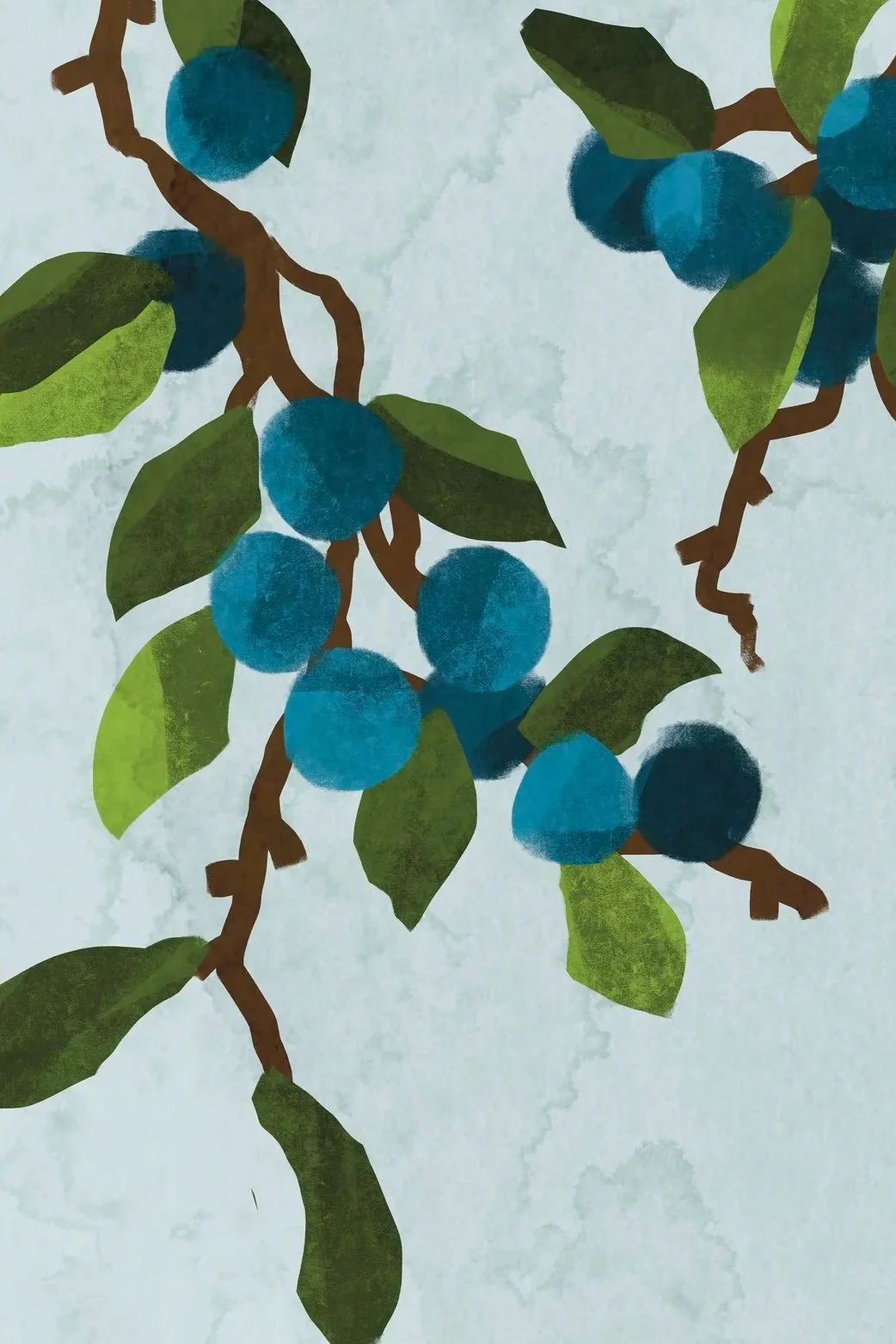
Blackthorns are an incredibly precious plant in Irish tradition and medicine. They hold lessons for us on how to move. Like many hedge trees, they bring nourishment to all manner of critters with their flowers in some seasons, berries in others. They grow together in protective twists, covered in thorns, offering cover to many animals, and even humans, as Irish people hid inside the hedge to keep our stories and language alive, which had been forbidden by the colonizers. These “hedge schools” would later move indoors, but they started here, literally in the protection of the hedge.
But the Blackthorn’s lesson is not just on how to show up when an ecosystem is falling apart. It is a warning of how not to. Blackthorns were used against the Irish people, too. British colonizers abused the traditional relationships that let Irish people weave natural barriers with the hedges and used them instead to create walls and cages to keep Irish people off their own lands, forcing them to farm for other colonies while they starved, often working them to death. The Blackthorn was turned against the Irish people. A heartbreaking and huge transgression. These lives are sacred and these plants are sacred. Blackthorns and other hedge trees mark portals between our world and the Other World. Even when you harvest to create shillelaghs there are rules to follow to harvest respectfully.
I think on this, and I think about the ways in which all of us, in all our various racialized experiences, can become a weapon against other people. When I reflect on the lessons and warnings of Blackthorn, it’s not a nice story about, oh, here's only how I feed back into the ecosystem. No, it’s: Here's how I understand how I’ve been used. Here is how I understand how I’m vulnerable to continuing to be used as a weapon for what I despise. And understanding that, here, then, is what I’m capable of when I move consciously into the ecosystem I’m in, whether I’m growing “where I should” or not. Here is how I move with balance in my efforts and accountability in my relationships. The lesson isn’t that, having been used as a thorny weapon against others, we must de-thorn ourselves and become passive. It's to make sure that we use our thorns with purpose, aiming at the right targets. And, it’s to make sure that we’re cultivating and bringing fruit with our thorns, too. Lessons from our relative in all its seasons, in all its relationships.
The Blackthorn has a lot to say about the complicated process of fighting a supremacist system you've been born into, that shaped you in ways you didn't want to be shaped. It makes everything physical and material, so we don’t go back into the kind of head balloon, intellectual blur – that’s what so many of us get from fighting with the Blackthorn and training in Bataireacht. It calls us back into our bodies and it makes the fight before us literal. It's not abstract to ask: If I don't want to be a weapon for whiteness or the colony, what do I become? We train and we answer: Oh, I become a home to myself so I do not take homes from others. Oh, I become a warrior if I do not want to be a weapon. I become an aid to myself and others. I make my solidarity a verb. I become what I need to be, shaped by my community.
JK: Beautiful. I'm so moved. The shillelagh, as you said, resembles a cane, and can and has been used as such. We've also talked before about the shillelagh’s likeness to a police baton. I’m fascinated by the different forms the shillelagh can take, and how it’s been used throughout history, if you can tell us a bit about that, too.
CM: Yes, so, shillelaghs are one of a few different types of sticks – or bataí – that Irish people fought with. The word specifically refers to a stick that’s about the length of a cane, with a defined knob on one end. Some fighters would leave the thorns on the stick so that their weapon would have extra bite. Others would load the knob with lead!
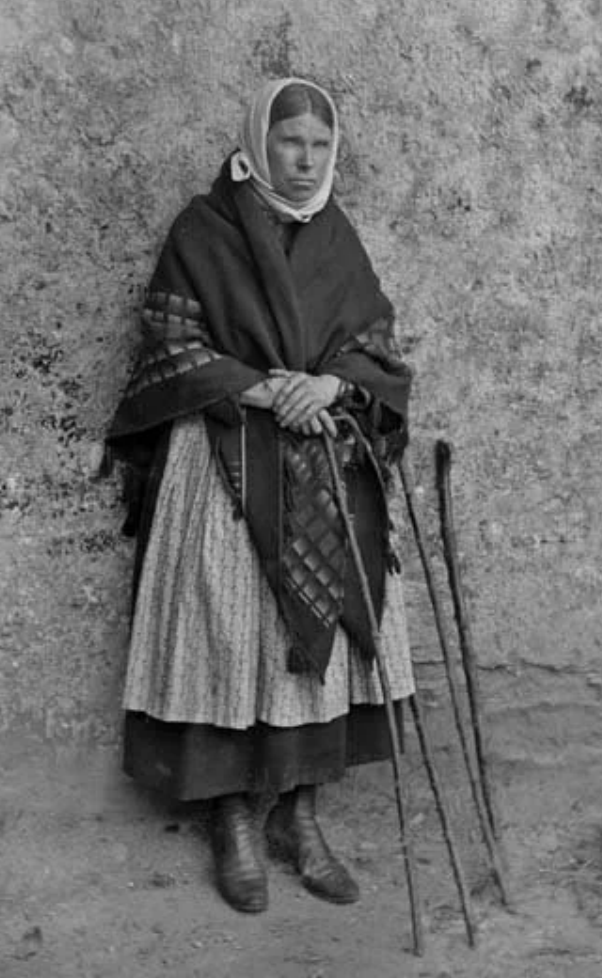
The most documented part of shillelagh fighting history happens in the 1700-1800s during the Penal Code era. The Penal laws codified the ongoing genocide against the Irish into specific restrictions against the Catholic population. Within this, Irish life and cultural expression was severely repressed, with continued attempts to destroy the Irish language, our dance, our traditional dress, our access to our Lands, our stories, and so many other customs – I mean, our spirit! And so shillelagh fighting became a hallmark of an older time.
People fought with shillelaghs in duels – or champion style one-on-one matches – as well as in Faction, or gang, or group fights. These fights were part of festivals, funerary rites and celebrations, as well as part of addressing community conflicts. Different Factions had their own style for wielding the stick and guarded these styles closely.
What’s not talked about enough, though, is that shillelagh fighting was also part of armed resistance efforts on the island against colonial forces, specifically in the fight against landlords.
Landlordism as we understand it was prototyped in Ireland, as Ireland itself was a proto-colony for the British Empire. “Landlordism” here refers to the same institutionalized system of colonization that we deal with today: Some random person – a landlord – claims to “own” the Land you live on, and demands rent in payment from you, with grave consequences if you don’t, or won’t, or can’t pay. Though there were great strides made through Irish uprisings and organizing against the landlords – the very history of the word “boycott” in fact – there’s still a housing crisis in Ireland to this day. The story and fight is ongoing.
When I think about shillelagh fighting, I think about the shillelagh’s role in resistance movements, but also of its role as a stress relief valve for the brutality of surviving genocide – its role in recreation and joy, the verve of spirit needed to fight back – and the way it kept alive warrior traditions that were almost entirely erased. Of course, because of these threads, and because stick fighters were killing colonizers with their art, and because the colonizers framed the Faction fights as “savage” and soured public opinion on them, shillelagh fighting became very stigmatized amongst the Irish themselves over time.
The many deaths and migrations caused by An Gorta Mór (the Great Hunger, or Famine), internalized shame from colonization amongst the Irish, and colonial crackdowns on Bataireacht in response to the uprisings wound up scattering the Factions and much of our knowledge of Irish stick fighting to the wind. But knowledge of our art survived because, like queer people, Irish folks took our arts underground to keep them alive.
The particular style of Bataireacht that I study and teach comes from a part of the Doyle family who are from the same part of Co. Galway as my own. In 1867, a keeper of our style, Edward Doyle, left Ireland for colonial settlement on Mi’kma’ki, otherwise known as Newfoundland. Edward brought his art with him, and he and his descendants kept it alive in complete secrecy with traditional protocols for over 100 years – until 1998. That year, after many years of trying, Edward’s great-grandson, Glen Doyle, finally got permission from his father to open the art to anyone who wanted to learn – whether or not you were of Doyle blood. This is like yesterday in martial arts terms.
The Doyles were unique among stick fighters in Ireland because they blended boxing with stick techniques and fought with a two-handed grip instead of the traditional one-handed. Though we refer to the family name as part of citing our art’s lineage, the true name for our style is An Rince an Bhata Uisce Bheatha, or the Dance of the Whiskey Stick. Family story says that's our name because the Doyles helped guard illegal whiskey distilleries. But it's unclear: Illegal how? Is this a fun underground story, or were they shills for the empire? I don't know that part.
Here and elsewhere, there is no purity in our histories. Instead, there's a reckoning to be had: Here we have a story of Irish people wielding our Blackthorns to fight for the liberation of the Land, and then leaving to become occupiers on other people’s shores – occupiers, and in many instances, enforcers of the colonial and racial order via the american and canadian police forces, which Irish people joined in droves... I feel like Bataireacht offers a really material look at this tension between colonized and colonizer, and offers an opportunity to take it out of an intellectual, blurry space and into an embodied one. I mean, it’s a combat art. When you train with it, with this history, you can hear it ask you clearly: Now that it’s your turn, how are you gonna wield this? For me, it's not really a question.
JK: Yeah, yeah, that's what it could be to pick up the shillelagh. To carry that fight forward.
CM: Right?! Exactly. To carry the fight forward. Literally. To fight and to learn how to aim that fight. That's what I think. Years ago, reflecting with frustration on how white anti-racists were showing up in support of the Black Lives Matter movement, someone wrote a Facebook post* about how “good white people” keep defanging themselves when what we actually need is white solidarity with teeth and claws. Reading that put the whole world into focus for me.
When we look at white participation in anti-racist movements, we see white people who want to resist white supremacy, and yet time and time again, out of a fear of – or attachment to – white power, we’ll choose to defang ourselves rather than learn how to use our teeth in the service of liberation and in solidarity with the Black and Indigenous peoples leading the way. It’s like we learn about the violence we’ve done – and are doing or are capable of doing – and out of fear of that violence, we snip our claws, forgo any sense of power out of fear that it’s all white power. We try to be completely harmless. But when we do this, we leave all the work of transformation on our siblings of the Global Majority!
A world beyond white supremacy doesn’t need harmless white people. It needs us to fight. It needs us to be connected with and capable of using our teeth and claws – just as it needs us capable of showing up to nourish and mend, to lend our power to the power of the collective – all the visionary and collective work of not just destroying, which we need, but also creating what happens after white supremacy. It needs us to really and truly get in on the action of transformation. We need our teeth for this, we just gotta learn where to aim our bite.
I know that more is possible, that other ways of living are possible, not just because they’ve existed before, but because we can create them now. I know that white supremacy is not inevitable and it is not forever. I know that colonizers don't control the future, and I fucking act like it. And that's my demand and request, my dream and my call to my fellow white people: Become a Person! Now! Let yourself have roots. Let yourself have thorns. And use them, use both. Use all. Refuse to wait around for when liberation comes. Help create it. You have so many people alive beside you right now that you can learn from and grow with, create with. You have the miracle of your body, you have the chance to help decide the legacy that gets carried forward. So don't fucking miss your chance.
*I (Cú) have searched and cannot for the life of me find the original author! It was posted around 2017. Please send if you know.
This interview was edited for brevity and clarity.