
To be a good ancestor
nicholas b jacobsen
“One of the characteristics of trauma is the deep desire to repress it. Until you tell the story, til you face the truth of the horrors that have happened – that harm will haunt you, haunt your dreams as an individual – haunt your collective unconscious as a society.”
— Rev. Serene Jones, On Being podcast
What does it mean to be a good descendant to ancestors who committed genocide and believed in the divinity of white, Christian supremacy? Perhaps more importantly, what does it mean to be a good ancestor when these historic horrors are one’s inheritance?
Ezekiel 18:4 reads, “The soul that sins shall die.” Though I am not a Bible believer and am reticent to invoke the concept of souls or sins, I know these are words my ancestors held dear. I also know that the genocide and land theft those same ancestors enacted is a double-edged weapon. These violences seek to destroy not only the oppressed, but also, in the oppressor, that crucial aspect of humanity which we often call “the soul.”
I see this spiritual death in the ways some Israelis (and U.S. Americans) enact and mock the genocide of Palestinians. I see it in the dehumanizing rhetoric used to render transgender people as a threat, in the escalating scale of violences against brown people and immigrants, in the ongoing epidemic of anti-Black policing, and in the words of a political pundit who tweeted, “We didn’t kill enough Indians” in response to calls for decolonization. Through our nation’s violent history and the ways in which that history has been rendered heroic by those of us who have assimilated to whiteness, we have lost this essential aspect of our spirituality and humanity. We are haunted by the ghosts of the harms we as a nation refuse to acknowledge.
“We are perhaps the only nation which tried as a matter of national policy to wipe out its Indigenous population. Moreover, we elevated that tragic experience into a noble crusade. Indeed, even today we have not permitted ourselves to reject or feel remorse for this shameful episode. Our literature, our films, our drama, our folklore all exalt it. Our children are still taught to respect the violence.”
― Dr. Rev. Martin Luther King Jr., “Why we can’t wait”
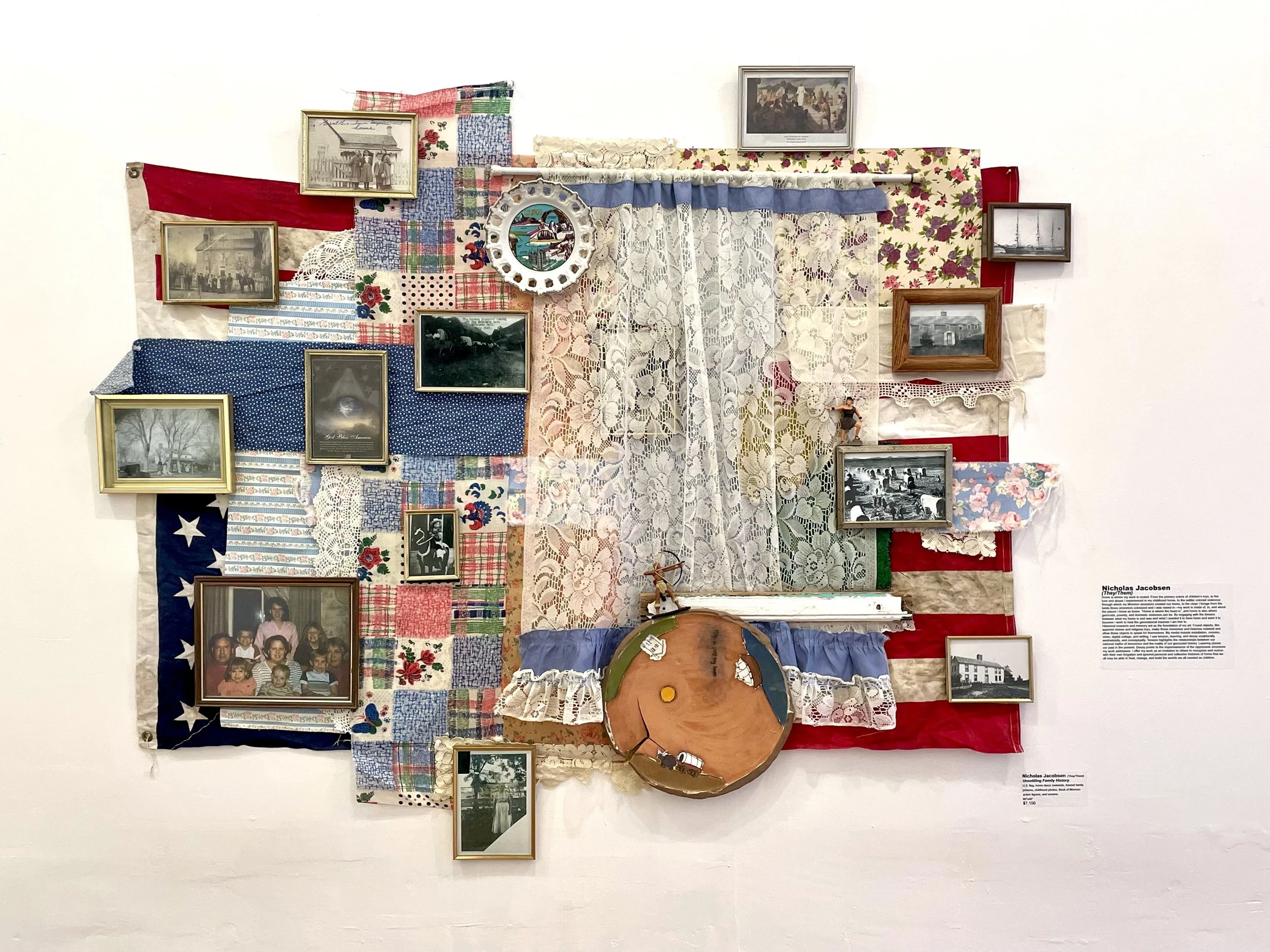
My great-great-great-grandpa, Alma Helaman Hale, emigrated as a child into the lands of the Newe (Shoshone). His first home there was a fort designed to protect his family from the Indigenous peoples fighting to defend their family from home invaders. By the age of 16, Alma and his older brother, Aroet, were enlisted in the Mormon Militia and sent by their religious and governmental leaders to commit genocide against the Timpanogos people with the instructions to “Go (and) kill them…never treat the Indian as your equal.”
My home is built on this physical violence and othering rhetoric. Literally in that Alma and his brother were rewarded with land for their participation in genocide. The land which the Kuttuhsippeh (Goshute) had tended as a relative became my ancestor’s private property. On that private property he farmed and raised more private property in the form of cattle. Through this rendering of land and life out of kinship and into ownership, Alma and his neighbors drove the Kuttuhsippeh, who depended on that land for life, to starvation.
A primary spiritual truth of most any mystical tradition is the idea that all of life is interconnected. A primary law of ecology is that all of life is interdependent. This is the truth behind the commandment to “love thy neighbor as thyself.” This is the truth behind the idea that the soul that sins, that brings harm, shall die. This is the truth that haunts those of us who have become white. We cannot build loving relationships on a foundation of violence, even when that violence isn’t directed at those we love.
Ideologies of superiority are ideologies of separation; they deny our interdependence. After my ancestor’s prophet voted in favor of a massacre, this prophet advised his people to take on a sense of superiority to the natives. In order to massacre families in their own homes, we must first see them as other, as inhuman. In order to destroy someone else’s humanity, we must destroy the part of our own humanity which carries the wisdom of our interconnections. This is soul death.
Over 100 years after my ancestors began building our home on a foundation of violence, I was raised, like so many other heirs of the US Manifest Destiny project, to view these actions as incredible acts of faith. I was raised to view genocide as an act of God – if I was told about it at all – and to view my people and my place on this land as unquestionably divine. My family, church and school all taught me to be proud of this heritage, that my responsibility to my ancestors was to carry on their Christian, settler-colonial occupation of these Indigenous lands. Unlike my ancestors and most members of the community of my origin, I have chosen a divergent path.
“Transformation involves risking death of a part of the self/selves that is no longer necessary. Decolonization implies a painful process of exposing deeply rooted weeds that need to be removed.”
– Dr. Ana Clarisa Rojas Durazo
The violences that founded my home continued to be a part of my home. I grew up with domestic violence, a story that I’ve found is not unique among descendants of Mormon pioneers. Just as my ancestors rendered Indigenous relations with land into private property and fellow humans into others, my dad saw his children as property and saw himself as superior. So he took what he wanted.
Similarly, as our ancestors exchanged their kinship with land for dominance over it, we began to take what we wanted from the land. This relationship of separation and ownership has also led to abuse of the land, our collective home.
The Great Salt Lake is desiccated and threatening to turn airborne all the toxins our settler colonial occupation has deposited. This potential toxic dust cloud – like the greater threat of climate collapse – is an archive of our destructive relationship with this land. It is the resurrected ghost of our suppressed collective trauma coming to haunt us.
"When we heal and make more room for growth in our nervous systems, we have a better chance of spreading our emotional health to our descendants ... In contrast, when we don't address our trauma, we may pass it to future generations"
–Dr. Resmaa Menakem, “My Grandmother’s Hands”
To heal the trauma we who were raised to be white, Christian, U.S. Americans have inherited means to go through the death of transformation. Unlike a soul death which comes from spiritual disconnection, the death of transformation is the shedding of armor we began to believe we needed as we became disconnected. The seemingly protective myths of superiority and separation are deeply rooted. To pull at them is to connect to generations-old pain and uncertainty. Which is a terrifying and grief-inducing experience. Which is deeply human and thus restores our humanity, bit by bit.
The work of decolonization and anti-racism is not work for allies. It is the work of those with mutual stakes. Disassimilating ourselves from the myth of white supremacy is how we who have assimilated to whiteness heal and restore our soul and our humanity, individually and collectively. This healing ripples out through our interconnections to our descendants, ancestors, kin, neighbors, communities and all life. This is how I become a good descendent. This is how I become a good ancestor.