
Let the history of the world answer: Angelina Grimké's abolitionist journey
Dr. Alicia Wargo
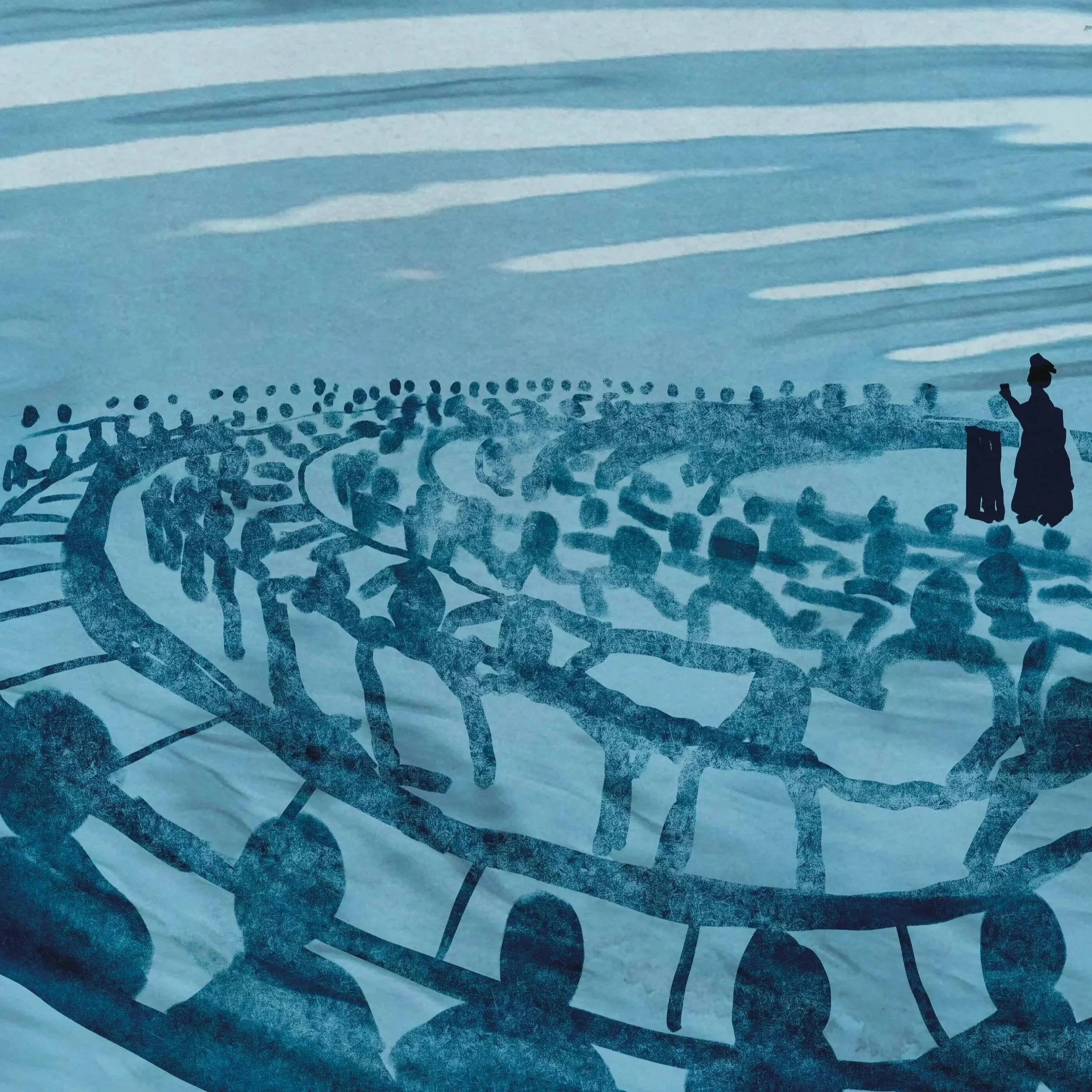
I stand before you as a Southerner, exiled from the land of my birth by the sound of the last and the piteous cry of the slave. I stand before you as a repentant slaveholder. I stand before you as a moral being, and as a moral being I feel that I owe it to the suffering slave and to the deluded master, to my country and to the world to do all that I can to overturn a system of complicated crimes.
Angelina Grimké (1805-1879) delivered these words to the Massachusetts State House on February 21, 1838, a day after her 33rd birthday. Her purpose was to demand that the legislature, composed solely of men, end the slave trade in Washington, D.C. She presented a petition with signatures of 20,000 women to this governing body, pointedly addressing the gender dynamic in her plea:
These petitions relate to the great and solemn subject of American slavery — a subject fraught with the deepest interest to this republic, whether we regard it in its political, moral or religious aspects. And because it is a political subject, it has often been tauntingly said, that woman has nothing to do with it. Are we aliens, because we are women? Are we bereft of citizenship because we are mothers, wives and daughters of a mighty people? Have women no country — no interests staked in public weal — no liabilities in common peril — no partnership in a nation’s guilt and shame? Let the history of the world answer these questions.
As the first woman in the United States to address a state legislature, her anti-slavery message gives us a glimpse into Angelina Grimké’s origin, identity and purpose as an abolitionist while previewing her role in the women’s suffrage movement. In the above excerpts from her speech, we see a strong moral conviction to end slavery and the first indications of Angelina’s beliefs that the fight for Black liberation and women’s liberation were intertwined.
Who was Angelina Grimké? What inspired her to organize the signatures of 20,000 women on an anti-slavery petition? How did she possess the audacity to break convention and address an overflowing Massachusetts legislative chamber at a time when women were not permitted to speak publicly to mixed-gender audiences? How did she tolerate the hostility directed at her?
Angelina was born into a white slaveholding family in Charleston, SC on February 20, 1805, the last of John Grimké and Mary Smith’s 14 children. The Grimkés, like many Southern families of the time, regularly attended the Episcopal Church. Religion was important to Angelina’s upbringing and strongly affected her sense of morality, which she later applied as a rationale for the abolition of slavery.
Angelina’s older sister, Sarah, read bible stories to the enslaved children her father owned, believing that enslaved people should be able to read the gospel directly rather than receive it secondhand. Because of this belief, Sarah began secretly teaching her Black maid to read. Sarah was eventually discovered by her father John, who immediately reprimanded her for breaking the law and forbade her from continuing. As a lawyer and judge on South Carolina’s Supreme Court, John believed it was his duty to uphold laws that prohibited teaching enslaved people to read. Fearing her maid would be physically punished if she disobeyed her father, Sarah ceased her instruction. However, this encounter had a profound impact on her, and as an adult, Sarah drew on this childhood experience to argue that slavery was sustained not only through physical control but also through the deliberate, systematic denial of education. Sarah passed these beliefs onto her younger sister, Angelina. Thirteen years her senior, she assumed a significant role in shaping Angelina’s beliefs about slavery and justice.
In 1818, John fell gravely ill. Despite their conflicting views on the morality of slavery, Sarah extended care for her father and traveled with him to Philadelphia, where he sought medical treatment unavailable in the South. There, Sarah encountered a social and religious environment different from the one she knew in Charleston. Sarah met several Quakers, who not only believed slavery was morally wrong, but also allowed women to become leaders in the church. Quakerism’s emphasis on the evil of slavery and their progressive views of women appealed to Sarah. Inspired, she left Charleston in 1821, moved to Philadelphia, and joined the Religious Society of Friends.
Sarah’s move left Angelina alone as a young adult in Charleston, questioning the actions of her siblings and parents without the support of her older sister. Angelina felt challenged by her brother Henry’s abuse of his enslaved laborer, John, who ran away after experiencing excessive beatings from Henry. Angelina’s diary entry on February 6, 1829 reflects her thoughts on the Southern depiction of slavery:
So hard is the natural heart that I am continually told that [the enslaveds’] situation is very good, much better than that of their owners … How strange, that anyone should believe such an absurdity.
While John was still missing, Angelina tried to appeal to Henry’s sense of humanity and pleaded for him to stop whipping John. According to her diary, the initial exchange did not go well. However, when John returned to the Grimké household, Henry did not punish him physically and instead sent him directly to work. This interaction with Henry was important to Angelina’s development as a race and gender reform advocate. It showed her that her words could impact another’s behavior, planting seeds for her future as an orator and writer in the abolitionist movement.
In 1829, Angelina left her home in Charleston to join her older sister Sarah in Philadelphia. She converted to Quakerism and became a member of the Philadelphia Female Anti-Slavery Society (PFASS) in 1833. PFASS was among the few racially integrated anti-slavery societies during the antebellum era, also known as the abolitionist era. It was a place of convergence for the political interests of Black and white women, focused on circulating anti-slavery petitions, holding public meetings and fundraising to financially support community improvement for free Black people.
Through their involvement in PFASS, Angelina and her sister Sarah developed a close friendship with Sarah Mapps Douglass, a Black abolitionist, Quaker, teacher and founding member of PFASS. In letters between the three women, Mapps Douglass detailed her experiences of racism within the Quaker community, sharing that she felt silenced by its members and had to sit separately from her white counterparts during the Quaker meetings at Arch Street. While separating Blacks from whites was customary in pre-Civil Rights America, Mapps Douglass questioned the inconsistency of the Quaker commitment to providing schools for African Americans, fighting to end slavery, and taking risks to participate in the Underground Railroad, yet discriminating against Black people socially.
Her friendship with Sarah Mapps Douglass had a profound influence on Angelina’s views. Inspired by PFASS lectures and conversations with Mapps Douglass, Angelina flung herself headfirst into a radical movement. Angelina began to question whether the Quaker religion’s beliefs about slavery aligned with her personal values. She began reading The Liberator and The Pennsylvania Freeman, two abolitionist publications that simultaneously matched and challenged her principles.
In 1835, Angelina Grimké wrote a letter to William Llyod Garrison, publisher of The Liberator, to express her passionate support for the cause of abolition. In her letter, Angelina wrote:
If persecution is the means which God has ordained for the accomplishment of … emancipation … Let it come; for it is my deep, solemn, deliberate conviction that this cause is worth dying for.
Without her permission, Garrison published Angelina’s letter in The Liberator. Her Quaker colleagues in Philadelphia, along with her sister Sarah, disapproved of the tenor of the letter, asking Angelina to retract her statement. Angelina refused. Her commitment to standing by her writing fractured her relationship with her sister and the Society of Friends on Arch Street. Sarah and many Quakers felt Angelina’s views were “too radical.” Angelina’s letter published in The Liberator became a pivotal moment in her journey as an abolitionist writer and orator.
Emboldened by the reaction to her letter, Angelina composed the pamphlet, “Appeal to Christian Women of the South” in 1836 to persuade Southern women to join the anti-slavery movement. Below is an excerpt from her appeal:
Why appeal to women on this subject? We do not make the laws which perpetuate slavery. No legislative power is vested in us; we can do nothing to overthrow the system, even if we wished to do so. To this I reply, I know you do not make the laws, but I also know that you are the wives and mothers, the sisters and daughters of those who do; and if you really suppose you can do nothing to overthrow slavery, you are greatly mistaken.
In her writing, Angelina goes on to name tangible steps women can take to support abolitionist efforts: Read about slavery, pray over the subject, speak about the moral imperative to end slavery and act against it. She wants women to believe in their own persuasive power to end slavery. Angelina’s words explicitly target Southern Christian women, hoping to appeal to their religious values as a vehicle to embrace their responsibility to end slavery. Several times in the appeal, Angelina describes slavery as sinful, oppressive and cruel.
The public response to Angelina’s “Appeal” drew immediate, mixed reactions from the white public. Garrison and other abolitionists applauded Angelina’s writing, while prominent leaders in Quakerism demanded her excommunication from the Society of Friends. After the publication and distribution of the appeal, the mayor of Charleston warned her mother, Mary, that Angelina would be imprisoned if she ever returned to her home in South Carolina. This threat deterred Angelina from visiting her hometown, meaning that Angelina did not see her mother again, although they exchanged letters.
After she wrote the “Appeal” in 1836, Angelina and her sister Sarah reconciled their differences. The two sisters relocated to New York from Philadelphia to begin organizing women in the anti-slavery movement. With the support of Garrison, the Grimké sisters became the first female agents of the American Anti-Slavery Society (AASS) in 1837, and began touring New York and New Jersey, lecturing about their first-hand experiences with slavery’s evils to mostly white, mixed-gender audiences. The sisters drew criticism from many white abolitionists and religious leaders for their unwomanly behavior of speaking out publicly to audiences that included men, something that was not accepted in the abolitionist era.
The Grimké sisters continued to exchange letters with Sarah Mapps Douglass and began to correspond with Sarah Forten, a Black poet and abolitionist. Forten wrote candidly to Angelina about her direct experiences with racial prejudice, urging the Grimké sisters to visit Black institutions in New York City in addition to the majority white abolitionist societies. Encouraged by Mapps Douglass and Forten, the Grimkés visited Black churches, literary societies and abolitionist meetings across New York City, listening to the stories of Black women. The Grimkés invited the women they met to attend the First Anti-Slavery Convention of American Women in May of 1837 at the Broadway Tabernacle in New York City.
Over 200 Black and white women from across the Northeast attended the convention. By the end of the convention, interracial cooperation among the women led to political action, together drafting a list of formal resolutions. One of these resolutions led to Angelina’s second major publication, “Appeal to the Women of the Nominally Free States,” which outlined how Northern women could advance the cause of emancipation. In her epistle, Angelina implicated both the North and the South for their complicity in slavery:
The interests of the North, you must know, my friends, are very closely combined with those of the South. The Northern merchants and manufacturers are making their fortunes out of the produce of slave labour, the grocer is selling your rice and sugar; how then can these men bear a testimony against slavery without condemning themselves?
The above statement draws attention to white abolitionists in the North who wanted to distance themselves from slavery, classifying it as a Southern problem. Like many of Angelina’s speeches and writings, her latest “Appeal” drew both excitement from some and disdain from others. Unsurprisingly, Angelina’s message was not well-received among all white abolitionists. Yet, even among those who criticized her, Angelina’s message piqued curiosity among Northern abolitionists who had not yet encountered a white woman who could speak so passionately and clearly about racism. Whether or not they agreed with her, white men and women with abolitionist sympathies wanted to see Angelina speak.
Over the course of 23 weeks in 1837, Angelina and her sister Sarah traveled throughout Massachusetts and Connecticut, speaking before at least 88 meetings in 67 towns, reaching close to 40,000 people, an astounding number for the time. The crowds attending the Grimké sisters’ speeches were composed of both supporters and critics. During their speaking engagements, the sisters were harassed and afflicted with labels of promiscuity and vulgarity by religious clergy and white attendees. Many white women, among them former abolitionist friends, denounced the Grimké sisters, wanting to separate themselves from becoming associated with their alleged impropriety. Of the two sisters, Angelina, the more outspoken with more radical beliefs, received harsher criticism and denunciation.
Despite the criticism, Angelina inspired thousands of women to take action against slavery and the insubordination of women. When Angelina Grimké approached the Massachusetts legislature in February 1838 armed with a petition of 20,000 signatures demanding the end of slavery, she was not alone. A crowd of 2,000 people, most of them women, filled the halls of the State House to hear her speak. Her words that day, combined with her hundreds of written statements and speeches between that day and the ratification of the 13th Amendment in 1865, were instrumental in convincing the United States to abolish slavery. Of all the pioneering white women who fought for the cause of abolition, Angelina Grimké most consistently and effectively linked the issue of slavery to women’s oppression.
Have women no country – no interests staked in public weal – no liabilities in common peril – no partnership in a nation’s guilt and shame?
During her speech, Angelina posed this rhetorical question to the Massachusetts state legislature, imploring the audience:
Let the history of the world answer.