
The heart of the race problem still beats
Orissa Arend
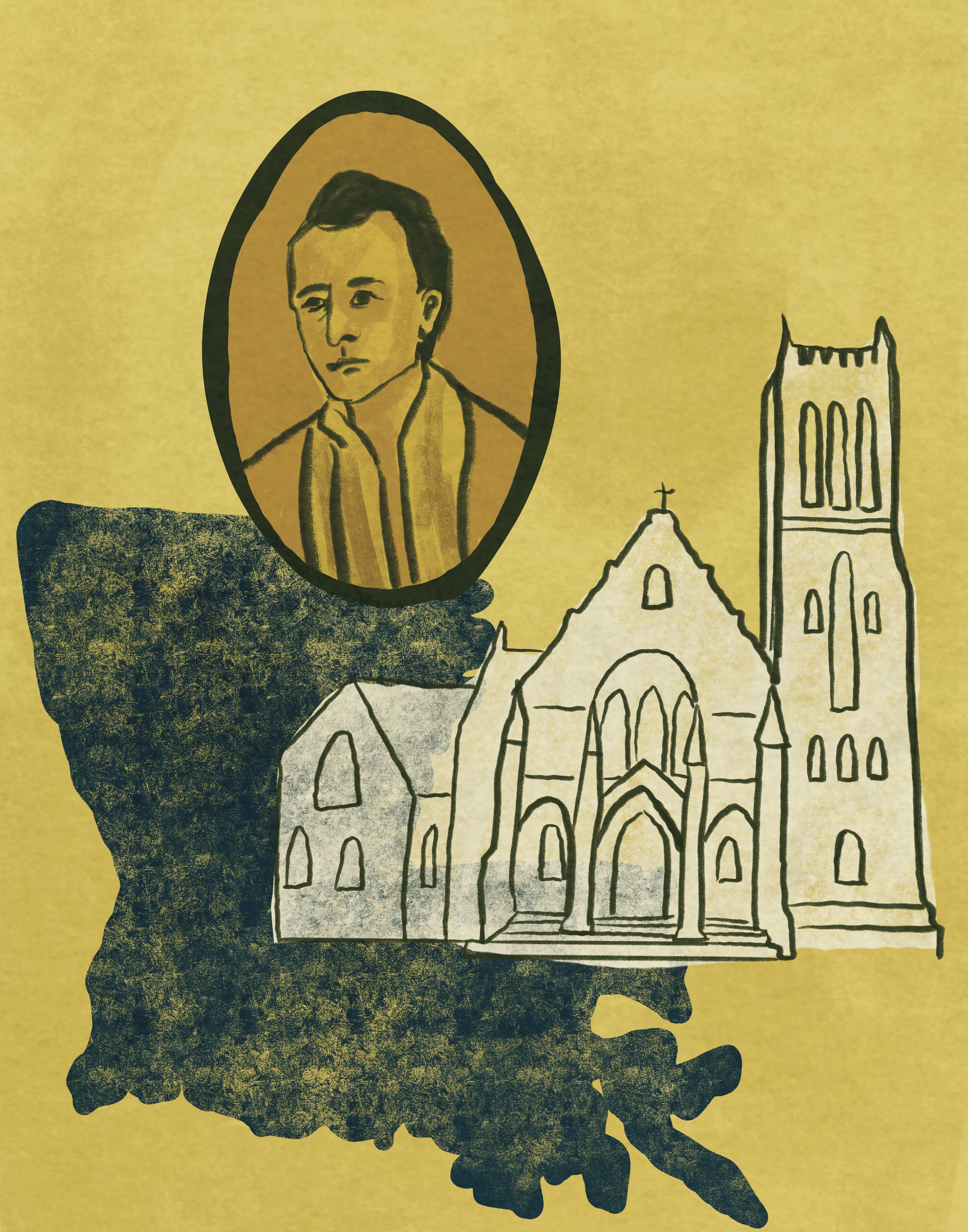
Quincy Ewing (1867-1939) was born in LaFourche Parish in southeastern Louisiana. Son of a doctor and grandson of a chief justice, he was a true son of the South. He attended Tulane University and the University of the South, and was ordained at Grace Church in Cleveland, Ohio in 1890. He was said to be brilliant, handsome and an acclaimed orator.
In 1891 Ewing became the first Dean of Christ Church Cathedral in New Orleans. After only 22 months he resigned from the ministry to be free to marry a divorced woman named Mary Carter Bower. After her ex-husband died, Ewing returned to the Episcopal ministry. As a leader in the church, he wrote and preached extensively about the “race problem.” We don’t call it that today; but why not? We haven’t solved it. His insights and proposed solutions are relevant in our time.
What is the race problem?
In a sermon preached in Greenville, MS in June of 1903, Ewing explained that the race problem knew few limits. “It is no secret how the ages of the past…dealt with this problem in its many forms. The motive of their dealing with it was hate, their equipment the sword, their solution blood and death; the result of that solution, more hate, followed by more blood and death!”
Six years later, in March of 1909, Ewing wrote in the Atlantic: “The problem, How to maintain the institution of chattel slavery, ceased to be at [the site of Confederate General Robert E. Lee’s surrender to Union General Ulysses S. Grant,] Appomattox; the problem How to maintain the social, industrial, and civic inferiority of the descendants of chattel slaves, succeeded it, and is the race problem of the South at the present time. There is no other.”
The foundation of the race problem in the American South, Ewing wrote in the Atlantic, “is the white man’s conviction that the Negro as a race and as an individual is his inferior; not human…not entitled to the exercise of human rights…The problem itself, the essence of it, the heart of it, is the white man’s determination to make good this conviction, coupled with constant anxiety lest, by some means, he should fail to make it good.”
In other words, the race problem in America is completely of our own white making: Trying to prove something true that isn’t. He gives some local examples of these efforts – the constant moving of the screens on the streetcar to separate Blacks and whites, and the hysterical reaction of a New Orleans newspaper when a Black girl won a spelling bee against a team of white girls.
Ewing had a prescient comment in his Atlantic article about how the fictional race problem is politically maintained. “The small politician’s trump-card, played early and late, and in all seasons, that the Negro is a black shadow over the Southland because of his excessive criminality, serves well the politician’s purpose – it wins his game; but only because the game is played and won on a board where fictions, not facts, are dominant.” This foreshadowing is especially relevant today, where the politician’s “trump-card” also falsely criminalizes immigrants, trans people, Muslims and others.
Theological underpinnings
Ewing believed that Jesus suffers more for our misuse of the Bible and our misunderstanding of what God wants, than he did as he was tortured and humiliated on the cross. If we keep trying to solve the race problem through hate, and we claim to believe in God, Ewing contends that we misinterpret St. John’s invitation as, “Beloved, – that is you of the Anglo-Saxon type – let us hate – not one another, but millions not ourselves, for this hate is of God.” Instead, of course, St. John wrote: “Beloved, let us love one another; for love is of God; and everyone that loveth is born of God and knoweth God.”
Toward courage
I’m an Episcopalian. I’ve attended Christ Church Cathedral, where Ewing preached. His picture is still on the wall. And yet I didn’t know his story. I can only imagine what courage of his convictions, what disregard for consequences, it took to speak out about the fallacy of white supremacy at a time when lynching was an accepted spectator sport and segregation was being codified into law. I am adding this Southern white preacher into my pantheon of heroes.