
Our Lineage is limitless: A letter from the editor
Alyssa Smaldino
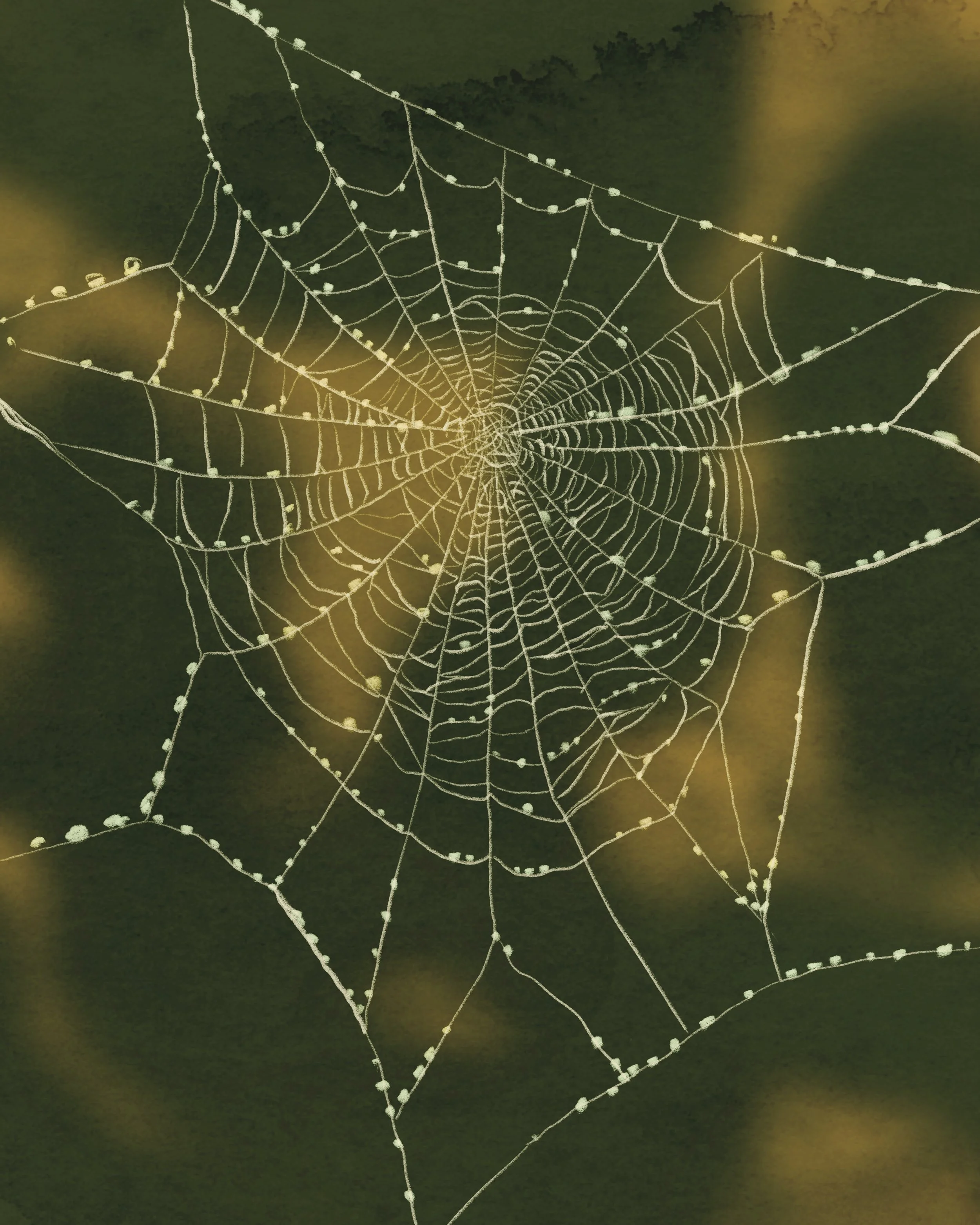
We are vast.
Each of us has around 8,000 ancestors from the past 13 generations alone. For those of us alive in 2026, that includes all our grandparents born since the late 1500s.
As people of European descent, some of our millions of collective ancestors colonized the planet. Others survived forced hunger and died by witch burnings. Some enslaved other human beings, and many resisted the cruelties of racial capitalism.
The Lineage issue of Libertroph Magazine includes nineteen pieces of art and storytelling that reflect the boundlessness of our collective inheritance. It looks at the complexity of those who have come to be “racialized as white” – a concept that’s existed for ~70% of the past 13 generations and ~0.1% of human life – and affirms that as long as whiteness has existed, there have been people refusing its inherent violence and preserving the human spirit.
Lyla June grounds us in a time before whiteness, “when our languages were thriving and our dancing feet kissed the face of the Earth.” She paints a picture of our life on the “Great Sacred Motherland of Europe,” long before the “soul death” that resulted from treating other people as inhuman, which nicholas b. jacobsen details through their own family’s story of “settler-colonial occupation of Indigenous lands.”
From this place of tension between our inherent interconnectedness and our brutal separation, we journey into the lives of people who show us that it’s possible to heal our spirits while claiming our responsibility to “return the curse of white supremacy,” as ahlay blakely incants.
Dr. Alicia Wargo revives the legacy of Angelina Grimké, who defied her Southern slaveholding family to stand against chattel slavery, a system whose abolition Grimké insisted was “worth dying for.” Orissa Arend introduces us to Quincy Ewing, a 19th century preacher who perceptively critiqued the “race problem” among white New Orleanians at a time when “lynching was an accepted spectator sport and segregation was being codified into law.” And Frank Gargione takes us into the life of his Great Uncle Frank Abarno, an Italian immigrant who, alongside his comrades from the Bresci Circle, planted a bomb in St. Patrick’s Cathedral “to make the rich realize the condition of the poor.”
Learning of these and other luminaries has expanded my sense of possibility for how we might eliminate racism. When I’m enticed by despair, I recall the lore of Caroline Picker’s heart-rending poetry: That Marilyn Buck spent “half a life behind bars” due to her insistence that “Black people will be free,” and that Catherine and Levi Coffin “organized dozens of neighbors to help over one thousand people escape slavery.” I remember that I am just one of millions of white people who have decided to “break rank,” alongside Beth Howard and her role model Anne Braden; Kate Davis Jones and Noel Ignatiev, who taught her how to be a race traitor; and countless others whose legacies are uplifted in this issue: Renee Nicole Good, Rachel Corrie, Joan Mulholland, John Brown, Carla Wallace, Pam McMichael, Mab Segrest, Bernadette Devlin, Caitriona Ruane, Luigi Mangione, Alexis Shotwell, Joanna Macy, Naomi Klein, and Libertroph Issue 01 contributors Darcy Ottey, Shula Pesach, and David Billings.
I wonder: If this one little magazine has brought so much forgotten history into the light, how many more stories remain in the shadows?
As organizers and artists who seek to end the terror of racism, it is our duty, in part, to unveil the stories of the ancestors who can show us the way. To sing our precolonial songs to our descendants, to channel the bravery of those who died defending their land and culture, to resolve conflict without cages.
We do not learn of our Lineage for the sake of learning alone; we learn of our Lineage to foster relations that fortify our organizing. We learn of our Lineage to cultivate faith that we are guided and protected in our courageous action. We learn of our Lineage to shape “the visionary and collective work of…creating what happens after white supremacy,” as Cú McCann urges.
Welcome to what Lynn Burnett calls “the great River, to which we all belong.” Dive in. We’re swimming against the currents toward the sea of liberation. And there’s a place for you, right here.
With care,
Alyssa
To get a sense of the vastness of Lineage reflected in this issue alone, check out the Lineage index, a compilation of over 100 people, organizations and publications that are referenced throughout Libertroph Issue 02.